—
Days
TCM for All Institute is a non-profit graduate school of acupuncture built on a simple idea: you shouldn't have to uproot your life to train in a healing tradition refined over millennia. Study online, sharpen your hands in Wyoming, and treat patients near home.
Too many capable people are drawn to Chinese medicine but turned away by geography — the demand that they quit jobs, move cities, and put life on hold. We designed this institute from a blank page to remove that barrier, without lowering the bar.
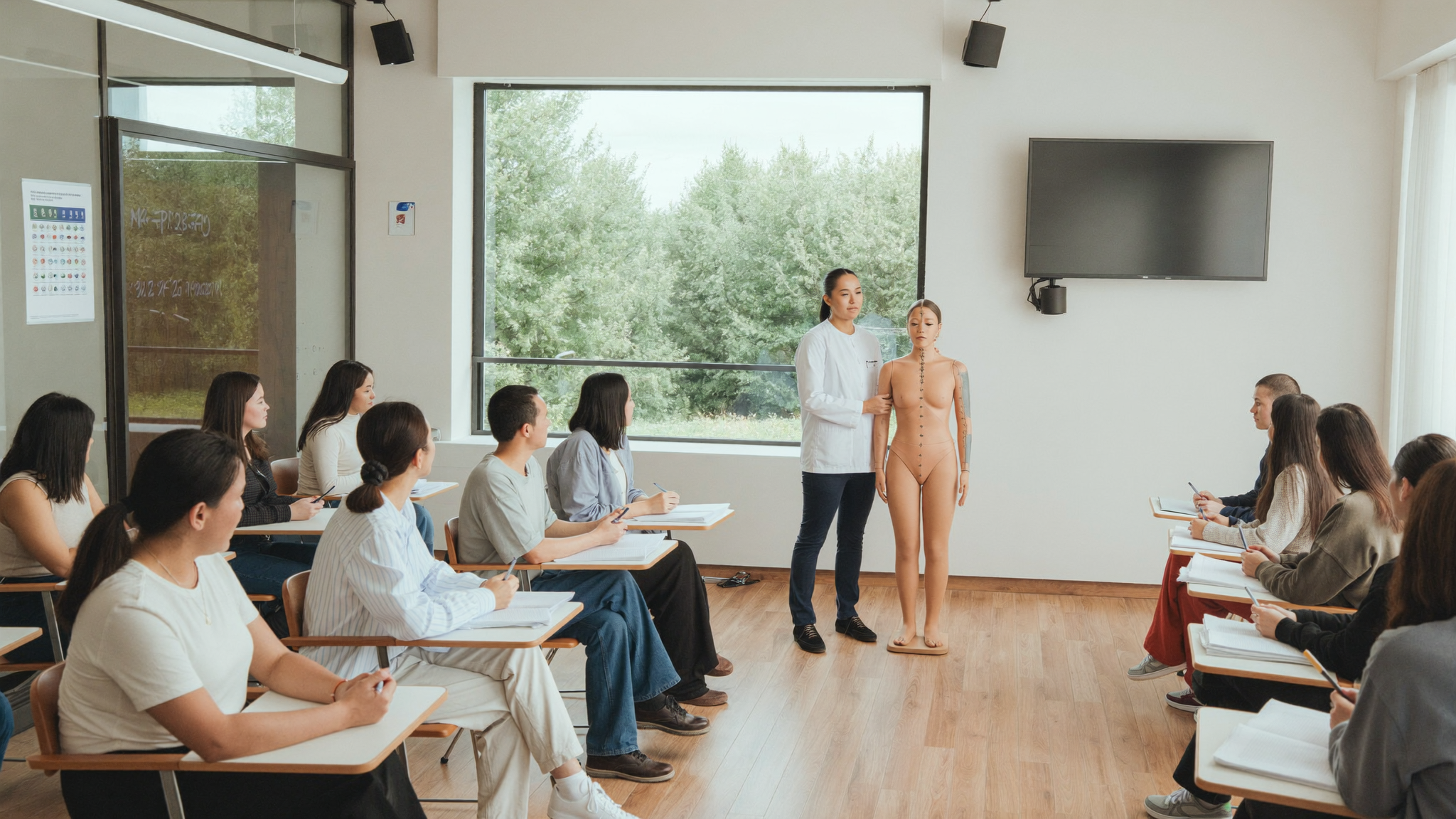
TCM foundations, channels and points, biomedicine, and practice management — all taught in live synchronous classes where canonical texts and modern science stay in conversation, in both languages.
See the curriculum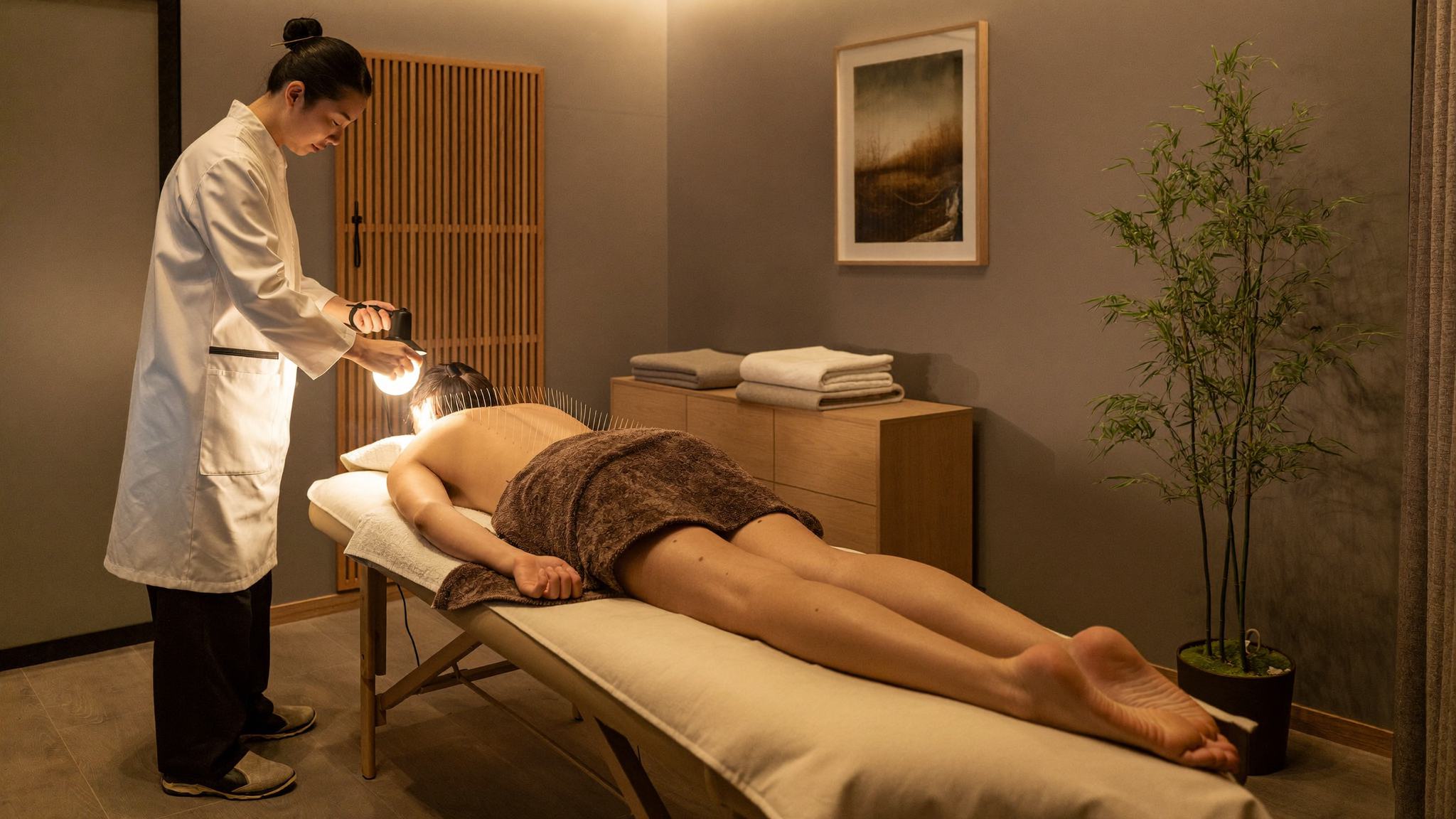
Every three months, 3–4 days at the Wyoming campus hub: point location, pulse and tongue diagnosis, needling, moxibustion, cupping, tuina, and Clean Needle Technique assessment. Physical skills are trained physically.
The intensive experience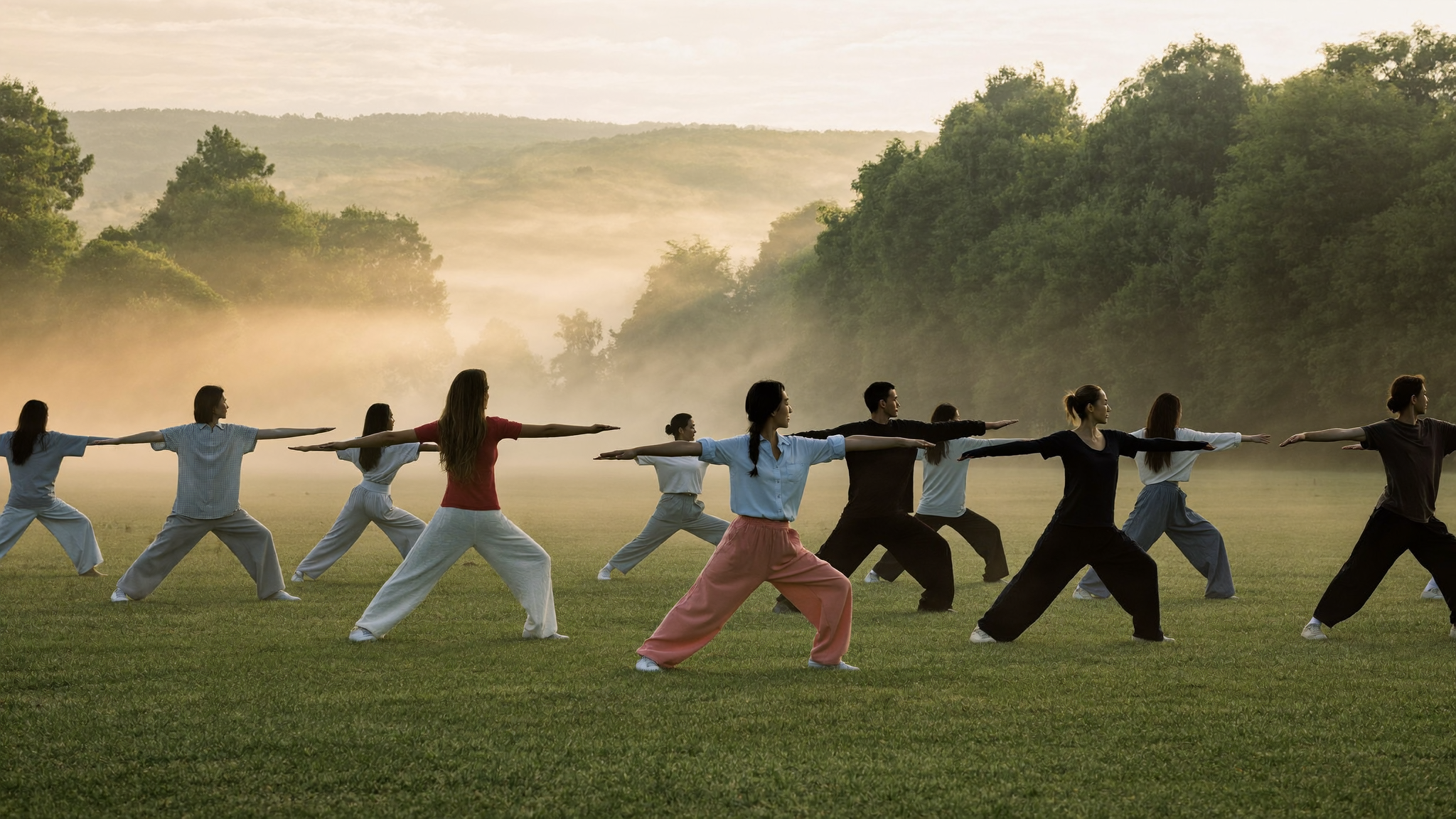
From month 10, you observe and then intern at a licensed acupuncture clinic in your home state — 690 hours under a supervisor appointed to our adjunct clinical faculty. Your first patients are your neighbors.
How the clinic network works"I've taught this medicine for over twenty years, and the hardest thing has always been watching good students give up because the nearest school was a thousand miles away. This institute exists so they don't have to."
"A bilingual classroom is not a translated classroom. We read the classics in their own words and teach the science on its own evidence — students get the full measure of both."
"Training in your own community means your first patients are your neighbors — and the practice you'll build after boards starts taking root on day one of your internship."
Applications open October 1, 2026. Join the interest list for info-session invitations and Founding Scholars award details.
TCM for All Institute is a proposed non-profit, degree-granting institution of higher education taking shape in Wyoming, built for students in every state. We started with a simple question: if you could build a school of Chinese medicine from scratch today, what should it look like?

In 2025, a group of clinicians, scholars, and community-clinic volunteers began meeting to read the medical classics together. Every discussion circled back to the same frustration: so many people want to study this medicine, and so few can get through the door. Tuition stops some; language stops others; and the demand to uproot a life and move across the country to one of a handful of campus cities stops most.
The reading circle became a founding team. We put "for all" into the institute's name not as a slogan but as a design requirement: a non-profit charter, bilingual courses, coursework you can take from any state, and clinical training in your own community. In May 2027, our first students log into their first live class — and start planning their first trip to Wyoming.
Every path into medicine begins with curiosity and is completed by discipline. Chinese medicine asks for both in equal measure: respect for two thousand years of recorded clinical experience, and honesty before the questions modern science raises. These are not competing loyalties — they are the same rigor, twice applied.
Every choice we've made in building this institute — bilingual instruction, a fully online didactic core, quarterly hands-on intensives, internships in students' home communities — points at one outcome: practitioners with sound hands, honest minds, and the range to serve patients across languages and backgrounds.
If that is the kind of clinician you intend to become, the founding class of 2027 has a seat for you. Our doors are wide; our standards are not lowered for anyone.
Our mission is to expand access to Traditional Chinese Medicine education — removing the geographical, financial, and language barriers so that capable people nationwide can train as licensed acupuncturists without uprooting their lives, taught across two languages that connect canon with evidence.
Fully online didactics, bilingual teaching, and non-profit pricing lower every barrier except the standard itself — starting with geography.
Classics read in the original; science taught on the evidence. Neither tradition gets a discount.
We honor teacher-to-student transmission and turn lineage experience into curriculum that can be taught, tested, and passed on.
Students learn to ask better questions: what works, for whom, and by what mechanism.
Your internship serves the community you live in — the training itself gives care back to your hometown.
Small cohorts, faculty mentorship, and cross-class support — in study as in clinic, no one works alone.
Curriculum architecture drafted; the "for all" charter adopted.
Incorporation as a Wyoming non-profit with the federal 501(c)(3) filing underway; the Chapter 30 private-postsecondary license application goes to the Wyoming Department of Education, surety bond posted.
Founding Scholars awards launch alongside monthly online info sessions; priority deadline January 15, 2027.
Target: WDE approval in hand, followed immediately by NC-SARA membership so students in the 49 other states can enroll online.
The founding cohort's first gathering at the Wyoming hub — meet the faculty, receive your white coat, open the institute together.
The founding cohort of 40 begins Quarter 1 — online classes start, with the first quarterly intensive inside the term.
After one full academic year of instruction we become eligible to file: self-study report submitted, site visit hosted.
The goal: ACAHM Pre-Accreditation (Candidacy) by month 24 of operation, before the first cohort graduates — the key that unlocks national board eligibility.
Twenty-seven months complete: the founding class finishes 105 credits and 690 clinical hours, then sits the NCBAHM national boards and applies for state licensure.
New institutions earn their approvals over time, and we've chosen to publish our progress plainly. Everything below is a plan and a goal — not a claim of current status.
| Body | What it covers | Our status |
|---|---|---|
| Wyoming Department of Education | State license to operate as a private postsecondary institution (Chapter 30) | Filing in progress, surety bond and fee included; targeted approval before the May 2027 opening |
| IRS 501(c)(3) | Federal non-profit, tax-exempt status | Wyoming non-profit incorporation and federal exemption filing in progress |
| NC-SARA | Interstate reciprocity to enroll online students from the 49 states beyond Wyoming | Membership application files immediately after state approval |
| ACAHM | Programmatic pre-accreditation (Candidacy) for the Master of Acupuncture | Eligible after one full academic year of instruction; we file at the earliest window, targeting Candidacy by month 24 — before the first cohort graduates |
| NCBAHM | National board exams — graduates of programs holding Candidacy qualify via the formal-education route | Follows ACAHM progress; curriculum built to the 1,905-hour national standard (1,920 delivered) |
Founding President (designate). Thirty years in medical education; insists bilingual means doubly rigorous.
Academic Dean (designate); professor of acupuncture and TCM theory, editor of a bilingual point-functions textbook.
Director of Clinical Education (designate); community-clinic veteran who designed the 690-hour distributed internship network.
Seven trustees from clinical, academic, legal, and community backgrounds — the charter reserves two seats for community members.
One degree, two languages, three delivery formats — 27 continuous months from your first online class to a board-ready graduate.
The MAc is a 105-credit, 1,920-hour graduate degree completed in 27 continuous months — nine quarters, year-round, no long summer breaks. Didactic coursework is 100% online; hands-on skills are trained at quarterly intensives on the Wyoming campus hub; and 690 clinical hours are completed at a licensed partner clinic in your home state.
Every course runs bilingually — live sessions taught in English and Mandarin with matched materials. An incoming bachelor's degree is required, so the program carries no general-education filler: every credit is Chinese medicine, biomedicine, or clinical craft.
Every quarter blends the three formats — live online courses, one Wyoming intensive, and, from Quarter 2 onward, clinical hours at your local partner clinic.
Our founding collection is digital-first and built in pairs: every classic held in an authoritative source edition beside its best annotated translation; every clinical subject stocked with core texts and journal databases in both languages — on your desk in whichever state you live.
Quarters run three months each, year-round with no long summer break — that's how 27 months reaches the finish line. The founding cohort begins Quarter 1 on May 3, 2027.
| Quarter | Dates | Notes |
|---|---|---|
| Quarter 1 (2027) | May 3 – Jul 30, 2027 | Inaugural quarter; founding ceremony May 1; first Wyoming intensive (Point Location I) |
| Quarter 2 (2027) | Aug 2 – Oct 29, 2027 | Second intensive (Point Location II); local clinical observation begins |
| Quarter 3 (2027–28) | Nov 1, 2027 – Jan 28, 2028 | Includes winter-holiday and Lunar New Year weeks; Clean Needle Technique intensive |
| Quarter 4 (2028) | Jan 31 – Apr 28, 2028 | Pre-clinical phase begins; local Internship I starts |
Live online classes, quarterly intensives, and a local internship — what low-residency medical education actually feels like, day to day.
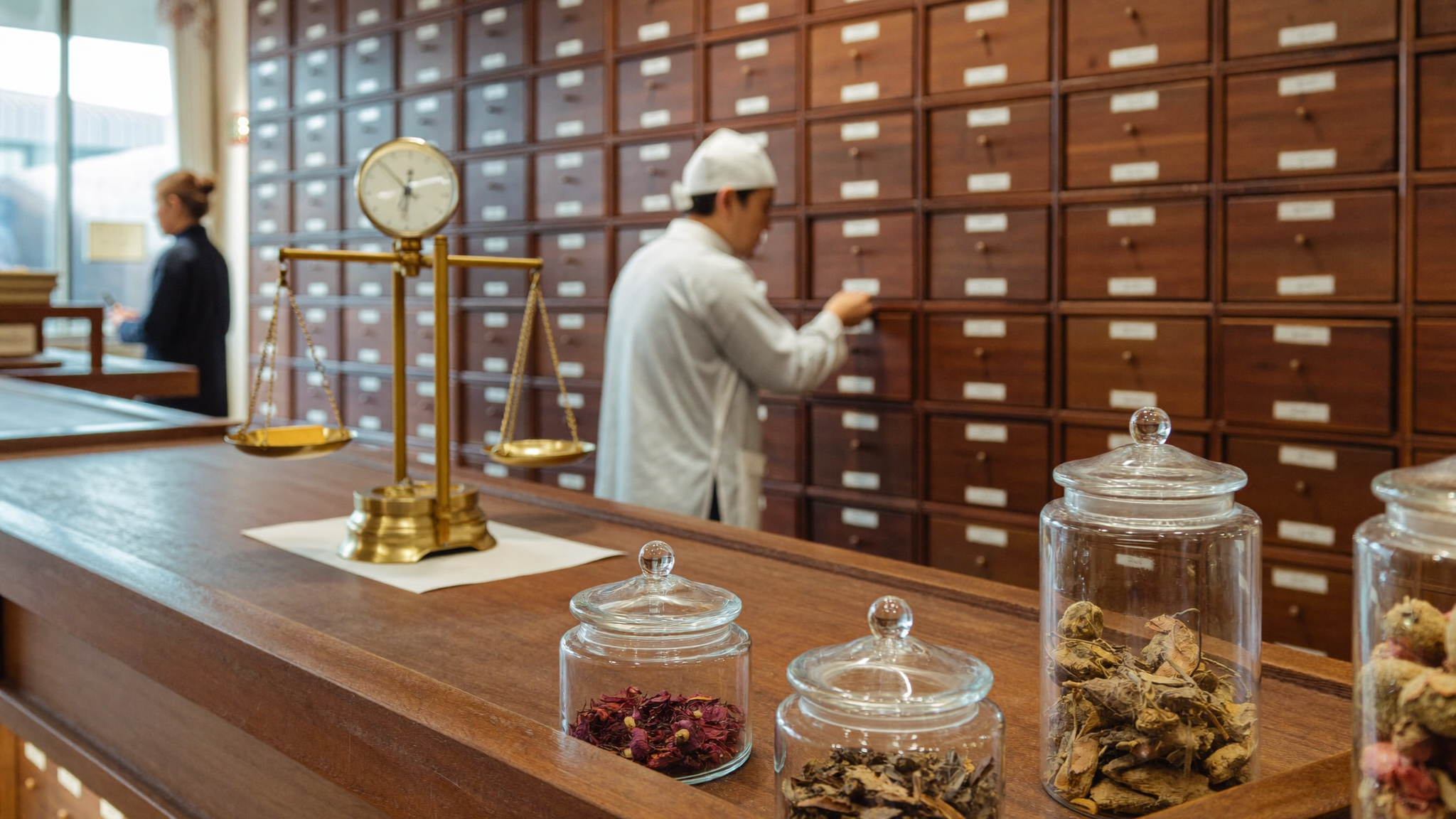
From the herb-drawer wall to the diagnostic teaching benches, the hub is built with the texture of a working clinic — so every hour on site is Chinese medicine you can touch.
Twelve-table studios with training models and supervisor stations — point location, needling, moxibustion, cupping, tuina, and the Clean Needle Technique assessments all happen here.
Intensive days start on the lawn — taiji and qigong at 7:30, the whole cohort together before the labs open. A reunion every quarter.
Quarters 2–3: room flow, first-glance assessment, and how a chart is built — at your local partner clinic.
Quarters 4–5: intake examinations, moxa and cupping, and your first treatments under your supervisor's direct eye.
Quarters 6–9: your own supervised caseload, owning the visit from diagnosis to follow-up.
We sign a Memorandum of Understanding with a licensed acupuncture clinic in your own city, formally appoint the supervising acupuncturist to our adjunct clinical faculty, and audit every training hour to ACAHM's off-campus clinical standards.
It keeps the "for all" promise twice over: you train without leaving your life, and your community gains supervised, affordable care in the process — so the practice you open after boards begins among neighbors who already know you.
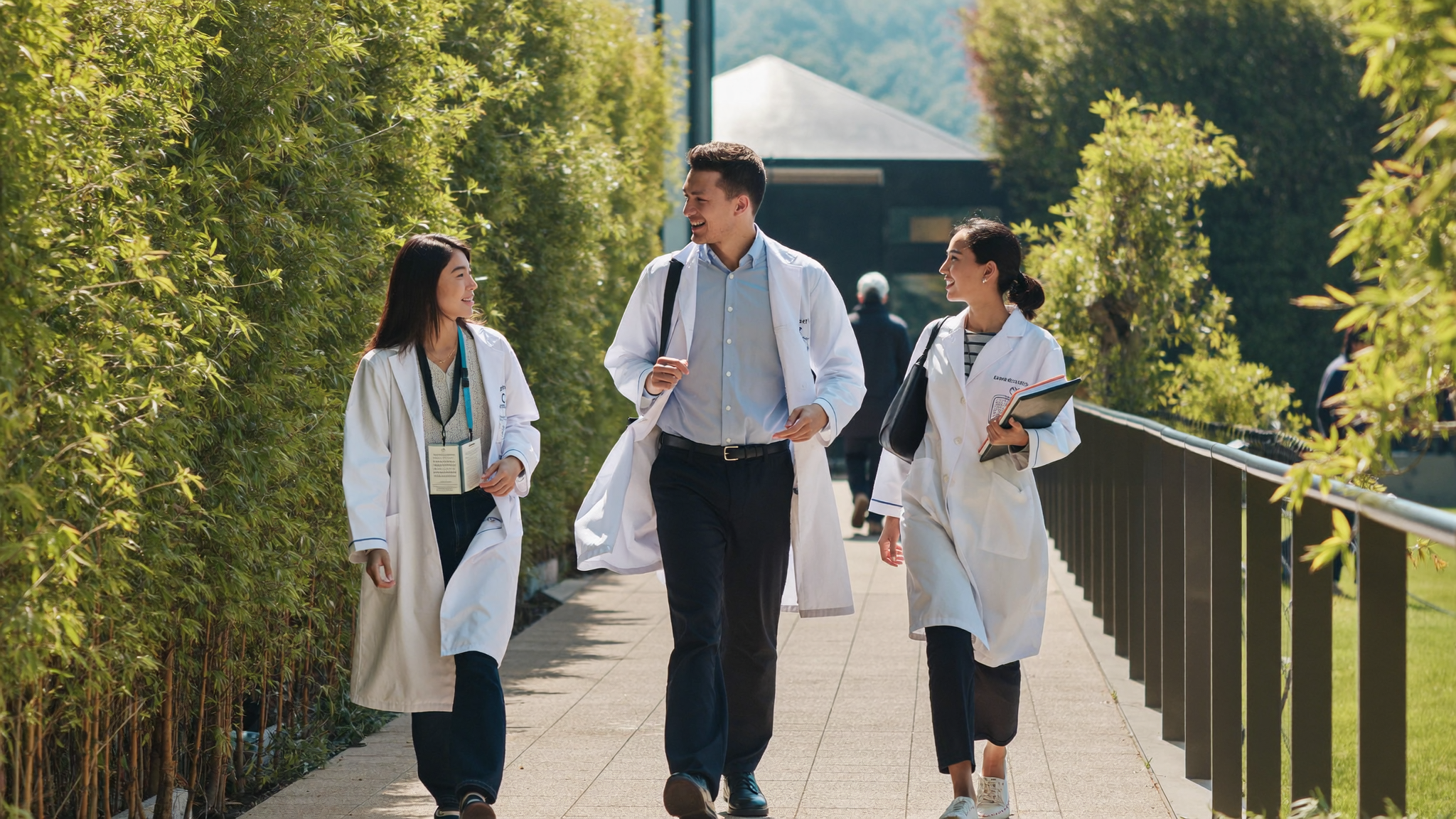
Daily 7:30 taiji and qigong — livestreamed together year-round, and moved out to the lawn at every intensive.
The weekly evening reading that started this school continues — now on video, across four time zones.
Regional pods meet weekly — coursework online, in person where several students share a city, and the whole cohort reunites each intensive.
Faculty mentorship, bilingual tutoring, and counseling referrals — free throughout the program.
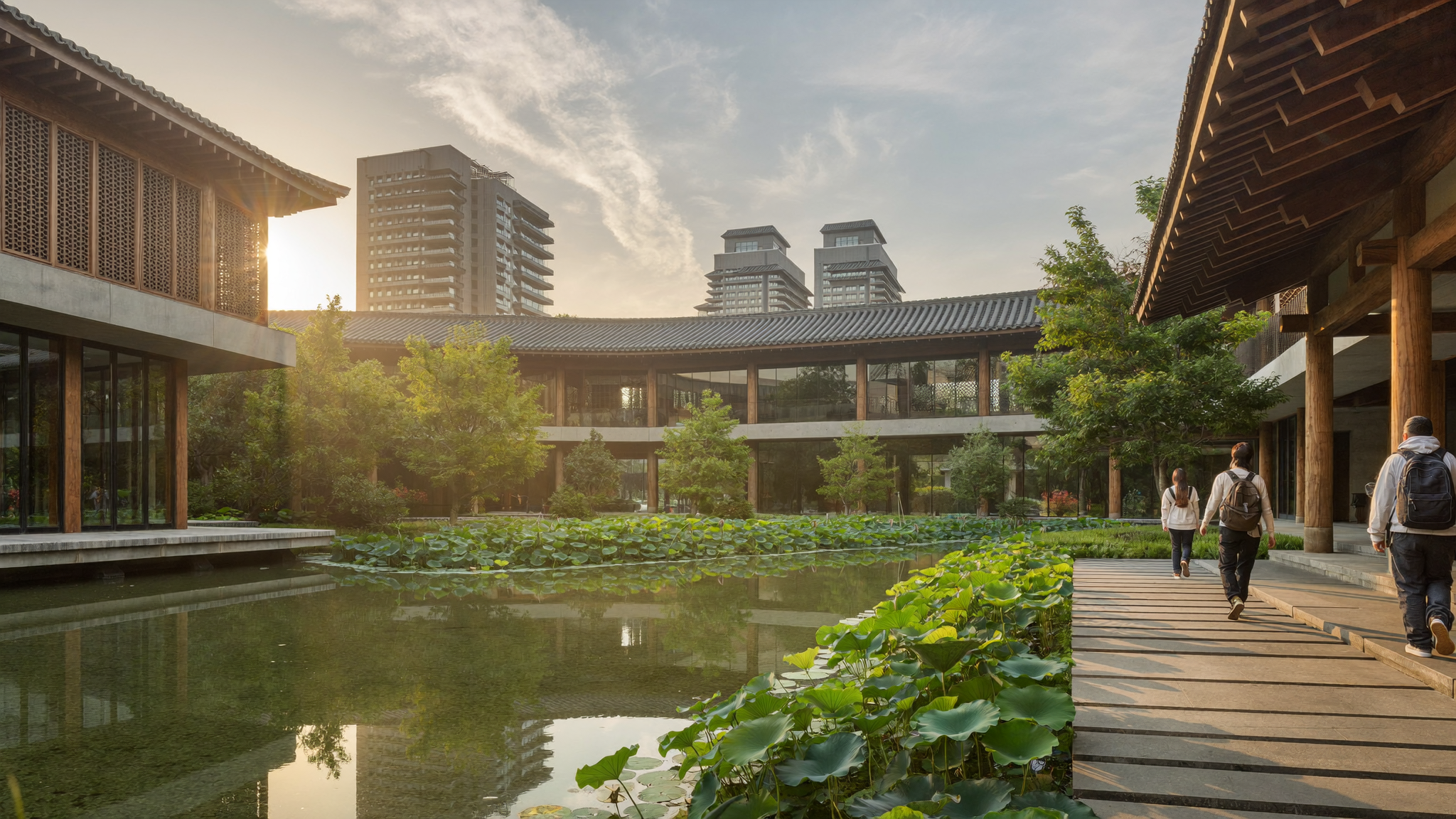
Forty seats, and one chance to be the first — from any state, no relocation required. Applications open October 1, 2026; priority deadline January 15, 2027.
There is no GPA cutoff formula here. We read every file individually, looking for three things: proven capacity for serious study, a clear reason for choosing medicine, and evidence of service to others.
Get invited to monthly bilingual info sessions.
Opens Oct 1, 2026. Fee: $75 domestic / $150 international.
Review begins when transcripts, letters, and statement arrive.
A 45-minute conversation with two faculty, in either language.
Rolling decisions within three weeks of a complete file.
Reserve your seat with a $300 deposit (credited to tuition). See you in May.
| Date | Milestone |
|---|---|
| October 1, 2026 | Applications open; Founding Scholars awards launch |
| January 15, 2027 | Priority deadline — full scholarship consideration |
| March 15, 2027 | Regular deadline (extended only if seats remain) |
| April 26–30, 2027 | Orientation week and white-coat ceremony |
| May 3, 2027 | First day of classes — Quarter 1 begins, the institute opens |
| Item | Amount | Notes |
|---|---|---|
| Tuition per credit | $295 | 105 credits ≈ $30,975 for the full program |
| Registration fee | $150 / quarter | Billed once in each of the nine quarters |
| Practicum kit | $350 / year | Needles, models, and lab materials for the intensives |
| Student liability cover | $80 / year | From the first clinical phase onward |
Founding cohort only: up to 50% off tuition for the entire program. Every complete application received by January 15 is automatically considered — no extra forms.
Need-based grants, zero-interest quarterly payment plans, and paid student roles in the digital library, LMS support, and admissions office.
The institute is designed for students living in the United States — didactics online, clinical training at a partner clinic near you. Here is exactly how eligibility works during formation:
Monthly bilingual info sessions, or a one-on-one call — in English or Chinese, your choice.
690 supervised clinical hours at a licensed partner clinic near home — the heart of the hybrid model, and where "for all" lands.
Under ACAHM's off-campus clinical training provisions, we sign MOUs with licensed acupuncture clinics across the country and appoint each supervising acupuncturist to our adjunct clinical faculty — so every training hour is supervised, documented, and audited to one campus-grade standard. In the room, you'll practice:
A community acupuncture clinic's everyday caseload becomes your textbook: neck, shoulder, and low-back pain; migraine; insomnia and stress; digestive complaints; allergies and immune support; women's health and cycle concerns; recovery care and constitutional tune-ups. And you'll learn firm referral standards — when a concern isn't acupuncture's to treat, you help the patient find the person whose it is.
| Phase | What you do | What your supervisor does |
|---|---|---|
| Observe · 150 hrs | Follow room flow, keep visit notes, study how charts are built | Treats and narrates — demonstrating care and judgment |
| Early internship · 150 hrs | Take intakes, deliver moxa and cupping, draft treatment plans | Approves each step before it happens |
| Full internship · 390 hrs | Carry your own caseload, diagnosis through follow-up | Reviews and co-signs every chart |
A Memorandum of Understanding defines training scope, supervision ratios, and quality audits — signed before any student arrives.
Supervising acupuncturists join our adjunct clinical faculty — with orientation, teaching support, and formal academic appointment.
Founding-cohort students begin observation hours from Quarter 2 in fall 2027; interested clinics can register now — we match by student city.
Admissions questions, partnership ideas, or plain curiosity — every note gets a reply.
We'll email info-session invitations and application reminders.